


Dartmouth secures $30 million to expand funded internships for undergraduates
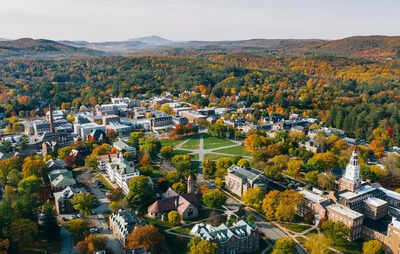
Dartmouth College has raised $30 million in endowed gifts to expand internship access for undergraduate students. The funding will support the Dartmouth Center for Career Design, with a portion dedicated to subsidising unpaid or low-paid internships, according to The Dartmouth.The announcement comes as College President Sian Leah Beilock has made career development a central focus of her administration. In a January 25 opinion piece in The Wall Street Journal, Beilock wrote that “there must be an undeniable return” for students who pursue higher education. She added that institutions should be evaluated on whether graduates secure jobs and contribute meaningfully to their communities.
Funding internships that do not pay

Joseph Catrino, executive director of the Dartmouth Center for Career Design, told The Dartmouth that internships are now “critical” rather than optional in today’s job market.Part of the $30 million will generate approximately $1.2 million annually to support students taking unpaid or low-paid internships. The aim is to ensure that financial constraints do not determine which students can afford professional experience.Students, Catrino said, should be able to accept roles at nonprofit organisations or smaller institutions without worrying about lost income. Beyond funding, the centre also offers one-on-one advising to help students assess interests and career paths.
Student feedback on advising
Some students told The Dartmouth that while advising services are accessible, there is room for improvement.Aryan Bawa ’27, who studies computer science, said more industry-specific guidance would help students navigate competitive sectors. Kevin Guo ’26, also a computer science student, said feedback on resumes can sometimes lack direct criticism. He suggested clearer, more concrete guidance would strengthen the process.Their comments reflect a broader expectation among students that career offices provide both encouragement and precise technical advice.
Expanding global internship pathways
Separate from the new funding, the centre is partnering with the Guarini Institute for International Education and academic departments to build international internship pipelines.One such initiative, the Dartmouth Initiative for Middle East Exchange, offers 15 to 20 internships across Morocco, Tunisia, Kuwait, Saudi Arabia, Jordan and the United Arab Emirates. Program director Jonathan Smolin described it to The Dartmouth as a model for structured international engagement, spanning sectors such as energy, humanitarian work, finance and computer science.The programme emphasises experience in politically and culturally complex environments, framing global exposure as part of workforce preparation.Gayathri Srinivasan ’26, an economics major interested in finance, told The Dartmouth that more students are now recruiting internationally. She noted that international students in particular are exploring opportunities outside the United States.Since returning to office, the administration of Donald Trump has imposed fees on US companies that hire international workers. Policy shifts have contributed to uncertainty for some international students weighing long-term employment options in the US.Phyo Thiri Thu ’26 said alumni access could be strengthened. She told The Dartmouth that earlier access to the College’s alumni directory would help students connect with graduates working in cities such as Dubai or London before completing their degrees.
Preparing for a changing labour market
Catrino also pointed to artificial intelligence and the COVID-19 pandemic as forces reshaping employment patterns. He argued that a liberal arts education equips students with adaptability for roles that may not yet exist.The $30 million endowment positions internships not as optional résumé additions but as structured components of undergraduate education. As Dartmouth expands funded placements, the test will lie in whether financial support and advising capacity keep pace with student demand, and whether access remains equitable across disciplines and backgrounds.For now, the College has signalled that career preparation is no longer peripheral to its academic mission but embedded within it.
Discover more from stock updates now
Subscribe to get the latest posts sent to your email.