Dinosaur fossil sold for record $44.6 million: Why billionaires are racing to buy prehistoric giants |
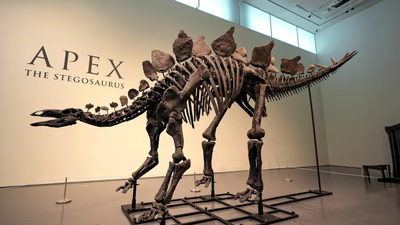
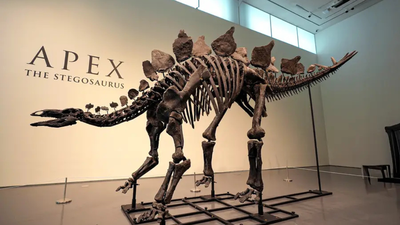
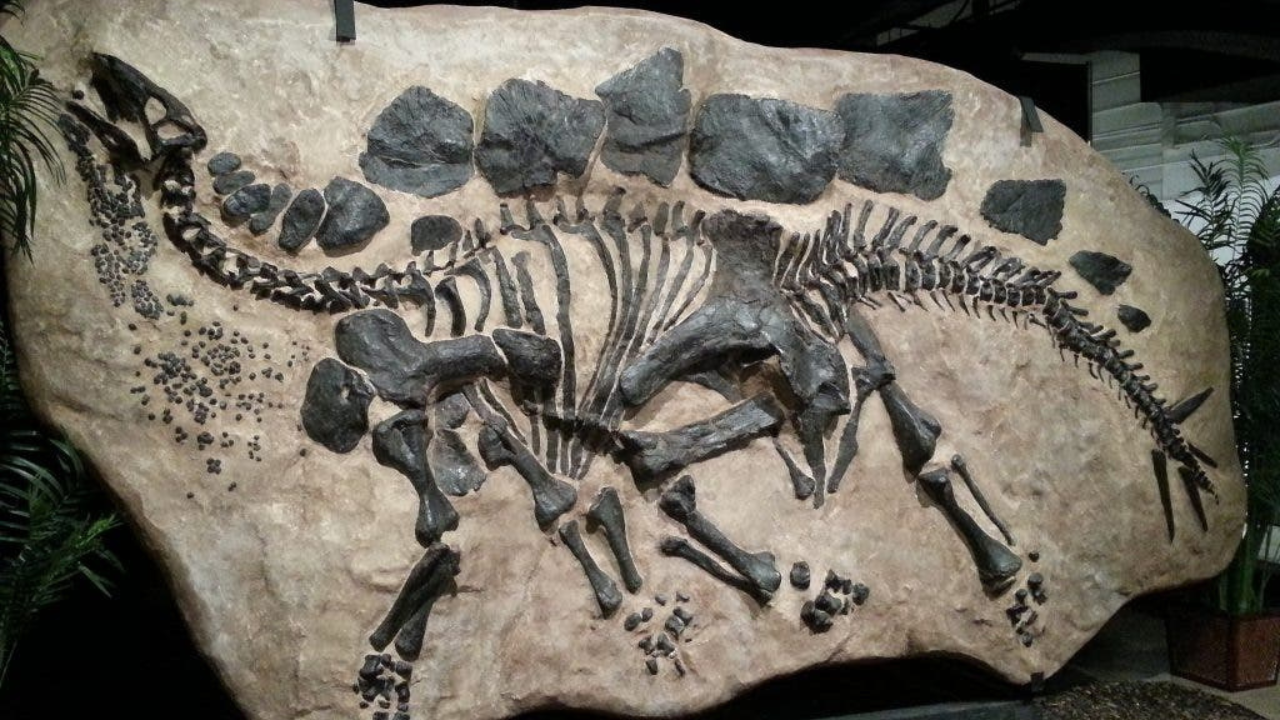
Long ago, dinosaurs ruled the Earth. Their gigantic size and immense strength allowed them to dominate land, sea and sky for millions of years. They travelled vast distances, reshaped ecosystems and sat unchallenged at the top of the food chain. Then nature took its own course. A mass extinction wiped them out, leaving behind only bones buried deep beneath the ground.Now, those bones are back in the spotlight.Once studied quietly in museums and university labs, dinosaur fossils are making global headlines. They are being auctioned for eye-watering sums, displayed in private galleries and treated as symbols of wealth and power. The latest trigger for this renewed fascination came in 2024, when a Stegosaurus skeleton sold for a staggering $44.6 million, the highest price ever paid for a fossil. The sale has reignited a fierce debate about money, science and who should own the remains of Earth’s deep past.
A record-breaking dinosaur fossil sale that shocked scientists
The fossil at the centre of the debate is a Stegosaurus nicknamed “Apex”. It was discovered on private land in Colorado and sold at auction by Sotheby’s. The buyer was Ken Griffin, founder and CEO of Citadel, one of the world’s largest hedge funds.At $44.6 million, the price shattered all previous fossil records. It also signalled that dinosaur skeletons are no longer niche collectibles. They are now firmly in the realm of high-end assets, competing with fine art, rare watches and classic cars.Griffin later said he planned to loan the fossil to an institution so it could be viewed by the public. But for many scientists, the sale raised deeper concerns that go far beyond one buyer’s intentions.
Why the United States fuels the fossil trade

A key reason the fossil market thrives is geography and law. In the United States, fossils found on private land can legally be owned and sold by landowners. This makes the country one of the few places where a large-scale commercial fossil trade is allowed.By contrast, countries such as Mongolia and China treat dinosaur fossils as national heritage. They cannot be privately sold or exported. Any significant finds must go to public institutions.“This legal gap is why so many important specimens come out of the US,” says Dr Thomas Carr, a palaeontologist and director of the Carthage Institute of Palaeontology. “Once they enter the private market, science often loses control.”
Billionaires, status and the ‘dinosaur effect’
For wealthy buyers, fossils offer something unique. They are rare, irreplaceable and visually spectacular. A mounted dinosaur skeleton instantly dominates any space, whether it is a museum hall or a private atrium.Collectors often argue that they are preserving history. Some say fossils inspire education and curiosity. Others see them as long-term investments whose value will only rise.“There is a strong status element,” says Dr Ashley Hall, a fossil trade researcher featured in Al Jazeera 101 East. “Owning a dinosaur is the ultimate symbol of exclusivity. There will never be another one like it.”Hollywood has played a role too. Blockbuster films and documentaries have pushed dinosaurs back into popular culture, increasing demand among collectors in Asia, the Middle East and the United States.
Scientists warn of a growing research crisis
Palaeontologists, however, see a darker side to the boom.Their main concern is access. Scientific research depends on repeated study, comparison and verification. When fossils disappear into private collections, that access can vanish overnight.One example frequently cited by researchers is Tyrannosaurus rex. Studies suggest that more than half of known T. rex specimens are now privately owned.“That creates massive gaps in our data,” says Dr Jingmai O’Connor, associate curator of fossil reptiles at the Field Museum in Chicago. “We cannot properly study growth, variation or behaviour if half the evidence is locked away.”Museums also struggle to compete financially. Public institutions rarely have the budgets to bid tens of millions at auction. As prices rise, scientists fear that fewer major fossils will ever reach public collections.
The defence from buyers and auction houses
Auction houses and collectors push back against the criticism. They argue that private buyers often rescue fossils that might otherwise erode or be destroyed. Some also stress that loans to museums remain common.Sotheby’s has said that many buyers are motivated by public interest and education. Griffin himself has emphasised his intention to make Apex accessible.But critics argue that goodwill is not a substitute for policy. Loans can end. Ownership does not.
A market worth millions and rising
Industry estimates suggest the global fossil trade is worth tens of millions of dollars annually. As prices rise, incentives change. Landowners and commercial diggers are more likely to sell to private buyers than work with researchers.That worries experts like Dr Carr. “Once fossils become commodities, scientific value becomes secondary,” he says. “That is the real loss.”
Who owns the deep past
The $44.6 million Stegosaurus sale has turned an old academic debate into a public one. Are dinosaur fossils scientific treasures or private property? Should they be treated like art, or protected like cultural heritage?For now, the market shows no sign of slowing. As billionaires race to own pieces of prehistory, scientists warn that humanity risks losing access to its own origins.The dinosaurs may be long gone. But the fight over their bones is only just beginning.
Discover more from stock updates now
Subscribe to get the latest posts sent to your email.