


Could humans age faster on Mars? Clocks on the red planet tick faster than Earth’s; Einstein’s theory explains why |
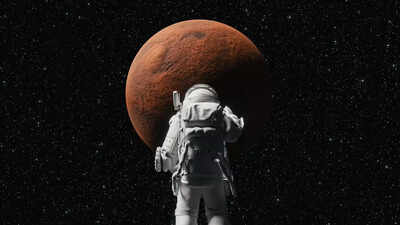
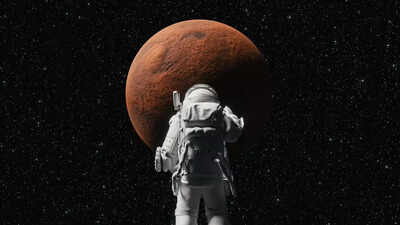
Can Mars let humans age faster? It sounds more poetic than reality, but it may be true technically. Two identical clocks: One on Earth other on Mars, after months, they slowly drift apart. Space already feels strange to most of us. A strange revelation: Time itself doesn’t behave the same everywhere. Recent research suggests clocks on Mars would run slightly faster than identical clocks on Earth, with tiny fragments of time. According to the study published in ScienceDaily titled, ‘Time runs faster on Mars and scientists just proved it’ reveals how Einstein’s relativity proves that time flows differently on Mars than on Earth. Yet experts say these tiny shifts could matter a lot as humans plan missions deeper into the solar system. It sounds like science fiction. It isn’t. Physicists have been predicting this for decades using Einstein’s relativity. And now, with more precise calculations, it seems Mars might quietly run on its own subtle version of time.
Why do Mars clocks tick slightly faster than Earth clocks

A clock is a clock, right? Apparently not in space. Research linked to NIST physicists suggests clocks on Mars would tick roughly 477 microseconds per Earth day faster than clocks on Earth. That’s less than a thousandth of a second daily. This difference comes mostly from gravity. Earth’s gravity is stronger, which slows time slightly. Mars has weaker surface gravity, so time speeds up a bit compared with Earth. Einstein predicted this long ago. There’s also orbital movement. Planets moving differently around the Sun experience small timing effects. Mars’ orbit is more stretched out than Earth’s, and because of that, the time difference doesn’t stay constant. It can shift by about 226 microseconds depending on where Mars is in its orbit.
Einstein’s theory explains why time flows differently on Mars and beyond
Einstein’s general relativity basically says that gravity and speed affect time itself. Clocks deeper inside strong gravity tick slower. Clocks in weaker gravity tick faster. That’s why time moves a tiny bit faster at high altitudes on Earth than at sea level. Mars sits in a weaker gravitational environment than Earth. So time gains a tiny lead.Scientists say an atomic clock would feel normal on Mars. The difference only appears when you compare it to an Earth clock later. Researchers are studying how to create coordinate time systems for the Moon and other planets. The idea is to link clocks across space while accounting for gravity and motion differences. This could help spacecraft navigate safely between worlds and keep communication networks stable.If humans spread across the solar system, each world might eventually have its own official clock standard. Earth time. Mars time. Lunar time.
Discover more from stock updates now
Subscribe to get the latest posts sent to your email.