Anglo-Saxon elite site found by archaeologists on Harold Godwinson’s Yorkshire land

Archaeologists have uncovered an “elite” Anglo-Saxon site on land that once belonged to one of England’s most legendary kings.
The discovery was made by University of York archaeologists near Skipsea, a village in East Yorkshire, on land that once belonged to Harold II, or Harold Godwinson.
Pictures show excavators carefully working around the ruins of a malthouse, a timber tower and a large hall.
ARCHAEOLOGISTS UNCOVER EERIE ANGLO-SAXON ‘SAND BODIES’ AT NUCLEAR POWER STATION SITE
They also uncovered a sunken structure that could have been used as “a watchtower, bell tower or even a tower-nave church,” according to a press release from the university.
The structures date between 750 and 850 A.D. and were found less than 1,000 feet from Skipsea Castle, a Norman motte-and-bailey castle.


Years after the structures were built, the land belonged to Harold Godwinson, the last Anglo-Saxon king of England.
Godwinson was killed during the Battle of Hastings in 1066 — which resulted in the Normans seizing power.
Despite owning the land, there is no evidence that Godwinson ever visited Skipsea — something researchers say may never be proven.
The malthouse and great hall are signs the site was once considered elite, excavation co-leader Jim Leary told Fox News Digital.
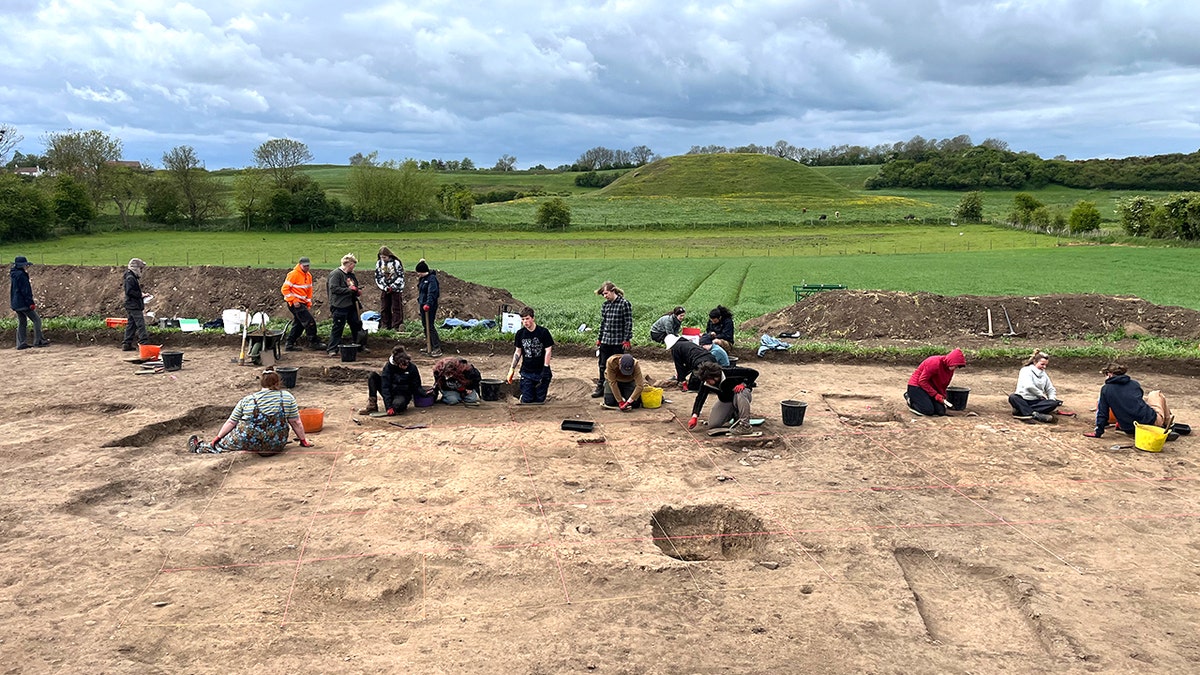
Radiocarbon dating indicates the malthouse predates Godwinson, though some structures may have existed during his lifetime. (University of York)
“There was also evidence of significant craft activities, including metalworking [and] hornworking,” he added.
“All of these suggest that the site was not a typical settlement but something much more high-status.”
TEST YOURSELF WITH OUR LATEST LIFESTYLE QUIZ
The team also found proof it was enclosed with a ditch and bank — which Leary said indicated it was a “lordly center.”
Archaeologists found a wattle-and-daub building, a structure made of woven wooden sticks coated with mud.
“The site would have been beside a lake that no longer exists, and we are finding evidence of prehistoric activity, including feasting and the crafting and use of flint tools.”
So far, Leary said that his team has also found a dry oven and a clay floor, which were both used in the process of making alcohol.
“This was used to dry the cereal after it had been ‘steeped’ and the malting process begun — a vital step in brewing,” he said.
CLICK HERE TO SIGN UP FOR OUR LIFESTYLE NEWSLETTER
“The timber hall is very large for this type of building — five meters (about 16 feet) wide and 16 meters (about 52 feet) long, marked out by post holes.”
Radiocarbon dating shows that the malthouse predates Godwinson, Leary said, but the tower and hall may have been present during his lifetime.
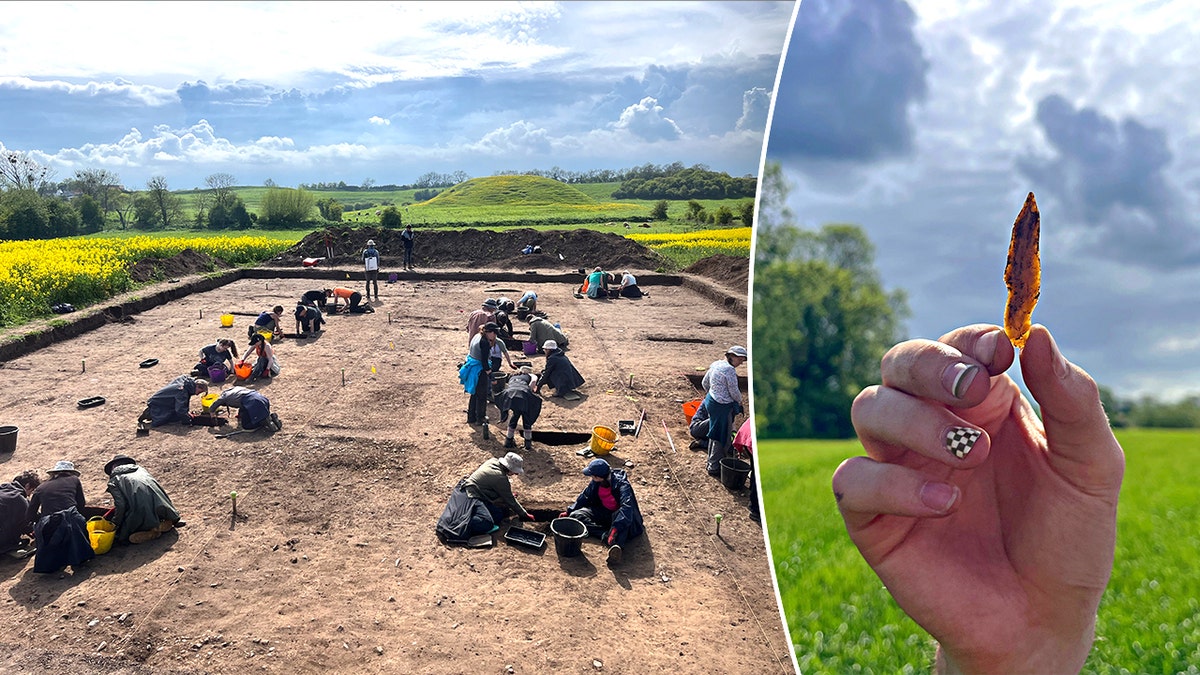
Archaeologists also uncovered evidence of prehistoric activity at the site, including flint tools, seen at right, and signs of feasting near a former lakeshore. (University of York)
“However, we’ll never be certain, and finding archaeological evidence that he visited the site would be nearly impossible,” he said.
“There are no documentary references to him ever visiting Skipsea.”
CLICK HERE FOR MORE LIFESTYLE STORIES
Leary added that, excitingly, archaeologists are uncovering even earlier evidence of activity at the site — veering into prehistoric territory.
“The site would have been beside a lake that no longer exists, and we are finding evidence of prehistoric activity, including feasting and the crafting and use of flint tools,” he said.
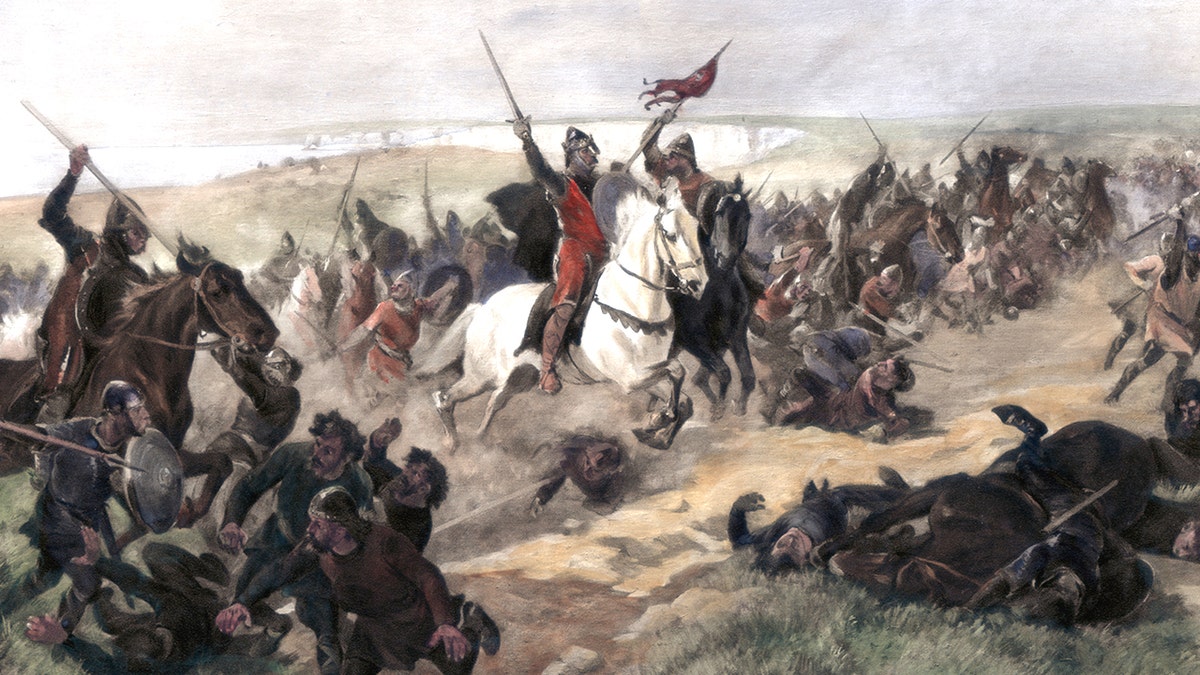
The land later belonged to Harold Godwinson, who was killed at the Battle of Hastings in 1066, depicted above. (The Print Collector/Getty Images)
Excavations are planned at the site each May for the next three years, giving undergraduate students the chance to participate in fieldwork.
The discovery comes a year after researchers made another Harold Godwinson-related find in England.
CLICK HERE TO GET THE FOX NEWS APP
In Bosham, researchers found proof of one of Godwinson’s residences, thanks to an ancient toilet.
Discover more from stock updates now
Subscribe to get the latest posts sent to your email.