



APJ Abdul Kalam once said, ‘Learning gives creativity, which leads to…”: 5 lessons it teaches students
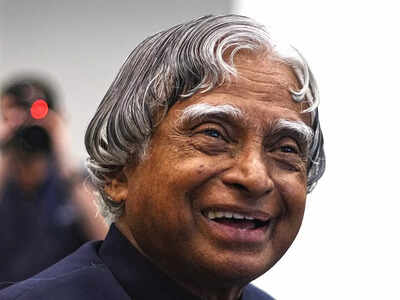
Dr. APJ Abdul Kalam often spoke about education not as a race for marks, but as a chain of habits that shape how a person grows. In one short line, he mapped that chain clearly. Learning, he said, leads to creativity. Creativity leads to thinking. Thinking leads to knowledge. For students navigating exams, pressure and uncertainty, this quote offers more than inspiration. Here are five lessons students can draw from it.
Learning is the starting point, not the finish line
Dr. Kalam places learning at the beginning, not at the end. Students are often told that learning is about outcomes: grades, ranks, admissions. But in this view, learning is an input. It is the raw material. What you read, observe, practise and question becomes the base from which everything else follows.This shifts the focus from performance to process. It tells students that learning does not lose value if it does not immediately translate into results. Its purpose is to prepare the mind for the next step.

Creativity grows out of exposure, not talent
Creativity is often treated as a gift that only some students have. Dr. Kalam links it directly to learning instead. The message is simple: creativity is not separate from study. It grows when students encounter ideas, problems and perspectives beyond their routine syllabus.For students, this means creativity does not require dramatic breakthroughs. It can begin with small acts: connecting two chapters, asking why a method works, or imagining how a concept applies outside the classroom. The more varied the learning, the wider the space for creative thought.
Thinking is an active skill, not passive absorption
In Dr. Kalam’s sequence, creativity leads to thinking. This shows that thinking is not automatic, but something which requires engagement. Students often mistake repetition for understanding. Memorising notes may feel productive, but it does not always activate thinking.Thinking begins when students test ideas, question assumptions and try to explain concepts in their own words. It is the stage where confusion appears, and that is not a failure. It is a signal that the mind is working. Dr. Kalam’s framing validates struggle as part of growth.
Knowledge is built, not delivered
The quote ends with thinking providing knowledge. Knowledge here is not information handed down by teachers or textbooks. It is something constructed through effort. This is an important correction to how students often view education.When knowledge is seen as delivered, students wait to receive it. When it is seen as built, students take responsibility for shaping it. They seek clarity, ask for feedback and revisit ideas. This approach prepares students not just for exams, but for situations where there are no model answers.
Education is a chain, and breaking it has consequences
Dr. Kalam’s quote works as a chain. Remove one link, and the system weakens. If learning is reduced to rote work, creativity shrinks. Without creativity, thinking becomes shallow. Without thinking, knowledge turns fragile.Education is not about proving intelligence, but about developing it step by step. Learning feeds creativity, creativity sharpens thinking, and thinking builds knowledge. For students willing to trust this sequence, education becomes less about fear and more about direction.
Discover more from stock updates now
Subscribe to get the latest posts sent to your email.