Cutting carbon emissions should not be top priority: Economic Survey

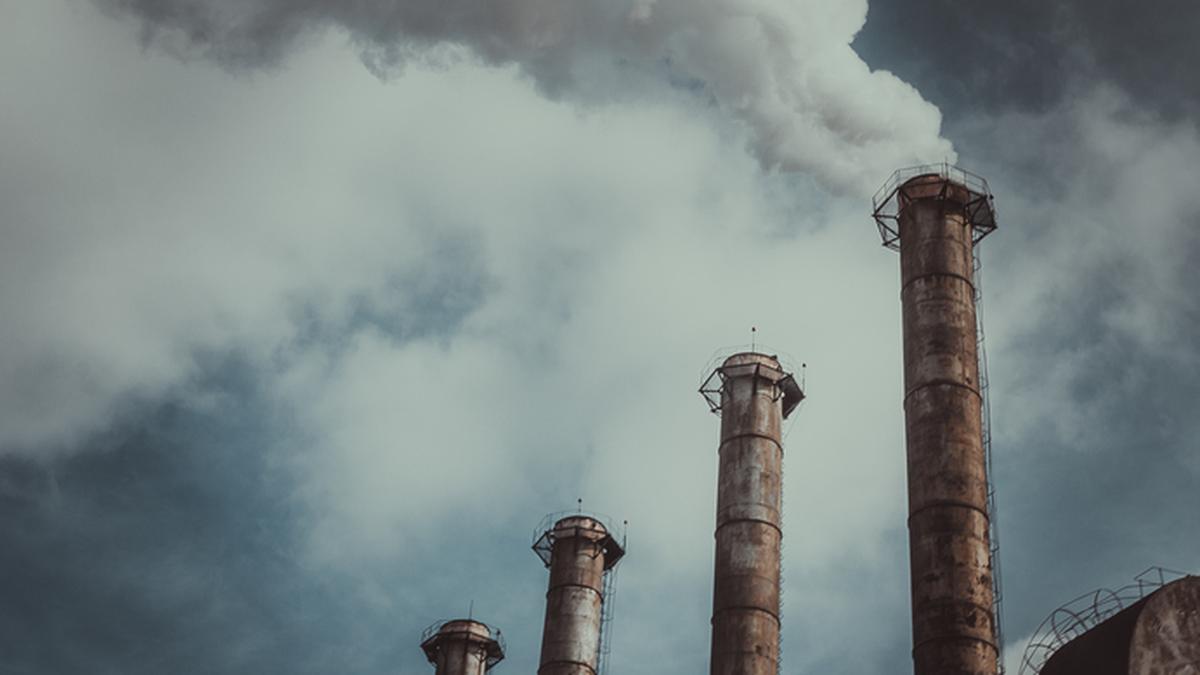
Representative image.
| Photo Credit: Getty Images/iStockphoto
The Survey in its past iterations has framed climate change as a global risk that threatens food production, livelihoods and has called upon countries – at various times – to “support” developing countries such as India to transition away from fossil fuel but at the same time being cognisant of its developmental needs, the latest survey explicitly says that mitigation (undertaking emission cuts) ought to be subservient to adaptation. This broadly echoes India’s stance in climate negotiations.


“Scarce fiscal resources should not be diverted away from health, agriculture and poverty reduction merely to accelerate near-term mitigation milestones. Growth and prosperity strengthen resilience and reduce vulnerability, and must therefore be treated as complementary to climate strategy rather than competing with it…Development is, in itself, a form of adaptation,” the document notes.

The Survey cites several instances in Europe last year – for decades the champion of climate action – as cautionary tales of the perils of adopting renewable energy too quickly. “In the Netherlands, celebrated as a leader in renewables and electric mobility, the rapid deployment of solar and wind energy has collided with a distribution network designed for an earlier era of centralised thermal generation. The result has been congestion, curtailment, and long waiting times for industrial connections, as well as appeals to households to moderate evening consumption to avoid overloading the system,” the Survey notes, “The challenge here is not ideological, but infrastructural.”

The widespread grid disruption in Spain on April 28, 2025, triggered by a combination of network instability during a period of high renewable energy output and transmission system sensitivity under shifting load conditions….”wasn’t a criticism of renewable energy itself; it’s a reminder that if we introduce complex systems too quickly without buffers, redundancy and institutional capacity, the system is likely to become fragile instead of thriving,” it cautioned.
The Survey mentioned ex-Microsoft Chairman, Bill Gates’, tonal shift on the threat perception of climate change late last year where he said that cutting emissions ought not to be at the cost of “reducing human suffering” and that a 3 degree C world would be a liveable one. ” (As opposed to the Paris Agreement’s goal to keep temperature rise to 1.5C and 2 C)
The survey noted that raising climate ambition in India—especially on mitigation—without corresponding support in finance and technology is neither realistic nor equitable. A credible and orderly transition from fossil fuels depends on the timely availability of reliable, non-fossil energy sources such as nuclear power, alongside a well-defined peak-emissions pathway.
“India must, therefore, approach the coming decade not as a climate policy problem in isolation, but as a broader energy system strategy — one that sequences the transition in line with growth, security, and institutional preparedness,” it added.
India’s “thoughtful transition” toward risk-based regulation, market-oriented instruments, digital compliance systems, and a framework of trust-based governance highlights the potential for environmental protection to coexist harmoniously with improved business operations, the Survey emphasised.
Published – January 29, 2026 09:32 pm IST
Discover more from stock updates now
Subscribe to get the latest posts sent to your email.