




Economic Survey 2025-26 paints rosy picture of job scenario, raises concerns on inequality among gig workers

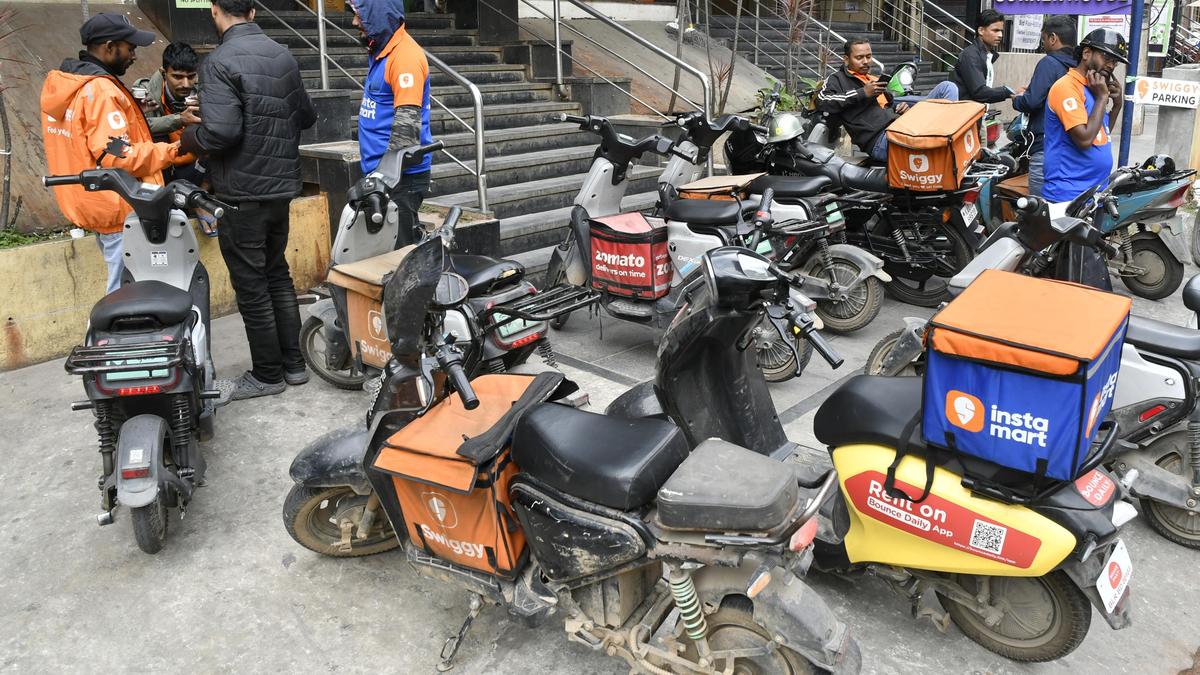
The survey, however, raised red flags over income volatility and lack of financial inclusion among gig workers. File
| Photo Credit: The Hindu

The Survey said the country has recorded significant employment growth in recent years, supported by structural reforms, tax rationalisation, and a sustained focus on skill development.
“Measures such as deregulation, GST 2.0, and labour reforms implemented by States have contributed to rising labour force participation and employment growth across industry and services. The employment and skilling ecosystem is being reshaped by demographic shifts, technological change, and evolving industry needs, including the expansion of gig and platform work,” the Survey said.
Hailing the implementation of Labour Codes, the Survey added that the Codes would play a key role in supporting formal employment and improving security for women and gig workers. “As definitions of work continue to evolve, dynamic labour policy and flexible regulatory frameworks would ensure employment expansion, worker security and well-being,” it added.
Promoting formalisation
Against this backdrop, the recent developments in digital platforms and policy reforms are reshaping work structures, fostering flexibility while promoting formalisation, the Survey said. “Gig workers continue to engage on a task-by-task basis with flexible hours and pay. The gig economy, encompassing delivery, ride-sharing, and freelancing, has witnessed structural growth, transitioning informal jobs into ecosystem-integrated roles. From 77 lakh workers in 2020-21, the sector witnessed a 55% increase to 120 lakh workers in 2024-25, driven by smartphone penetration among over 80 crore users and 15 billion UPI transactions per month. Now representing over 2% of the total workforce in India, growth of gig workers outpaces overall employment, with non-agricultural gigs projected to constitute 6.7% of the workforce by 2029-30, contributing ₹2.35 lakh crore to GDP,” the report said.
The gig workers have ‘thin-file’ credit access, which remains a concern, according to the Survey. “Platform algorithms control work allocation, performance monitoring, wages, and supply-demand matching, raising concerns about algorithmic biases and burnout. About 40% of gig workers report earnings below ₹15,000 per month. Limited skilling and fears of job losses due to technological advances such as artificial intelligence (AI) and machine learning (ML) add to worker vulnerability,” it added.
Published – January 29, 2026 02:40 pm IST
Discover more from stock updates now
Subscribe to get the latest posts sent to your email.