Economic Survey 2025-26: Centre mulls marketing ban, highest GST on ultra-processed foods

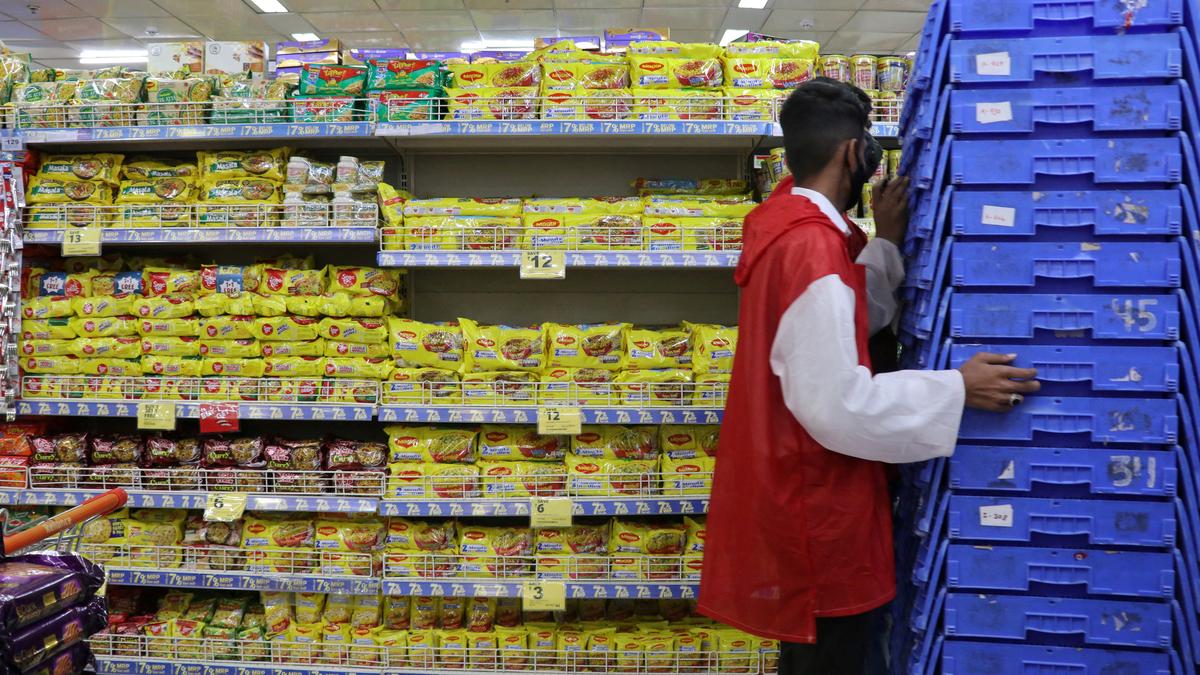
Representative image.
| Photo Credit: Reuters

The survey calls for filling policy gaps in Advertisement Code regarding UPFs, pointing out that while misleading, unverified, or unhealthy advertisements are prohibited, the term ‘misleading’ is undefined, leaving it to interpretation. Similarly, the Centre’s guidelines prohibit ads from exaggerating health benefits, but lack clear nutrient thresholds or a framework for identifying misleading claims, notes the Survey.

In a bid to tackle these marketing challenges, the Survey has suggested enforcing restrictions on the marketing of infant and toddler milk and beverages, replacing the Indian Nutrition Rating (or Health Star Rating) system with warning labels and restricting marketing to children. It also suggests action on school and college sponsorship of events by UPF manufacturers and a ‘nutrient-based tax’ on these food products. If UPFs exceed thresholds for sugar, salt, or fat, the Survey proposes to levy the highest slab of GST and a surcharge.
The Survey urges the Food Safety and Standards Authority of India (FSSAI) to bring UPFs under regulation with a clear definition and standards by integrating it into the existing frameworks, rather than replacing them. It also calls for the raise awareness about the adverse effects of consuming UPFs through targeted campaigns aimed at schools and colleges.

As per a Lancet study, India’s UPF sales has by more than 150% from 2009 to 2023 – retail sales have grown from $0.9 billion in 2006 to $38 billion in 2019. During the same time, India has witnessed a doubling in obesity among men and women, notes the Survey. The 2019-21 National Family Health Survey (NFHS) reports that 24% of Indian women and 23% of Indian men are overweight or obese. Among children, over 3.3 crore were estimates as obese in 2019 and this figure is projected to reach 8.3 crore by 2035.
The Economic Survey projects that India’s GDP will grow in the range of 6.8 to 7.2% in 2026-27 while domestic inflation remains low at 1.7% for April-December 2025. After this precusor to India’s financial health, Ms. Sitharaman is scheduled to present her ninth consecutive budget speech – a first on Sunday (February 1, 2026) to a joint session of Parliament.
Published – January 29, 2026 08:41 pm IST
Discover more from stock updates now
Subscribe to get the latest posts sent to your email.