Who is Divya Dwivedi? Why she is at the centre of IIT Delhi’s caste conference controversy
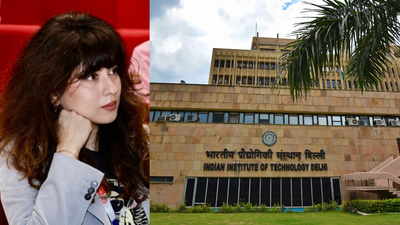
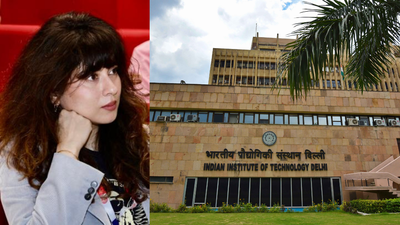
For three days, IIT Delhi hosted an academic conference on caste and race. It was meant to remain what most such events are: A closed-loop argument among scholars. Instead, it became a public test of institutional judgment. A screenshot from the programme—centred on a contentious comparison—circulated online, drew sharp criticism, and pushed the institute into its most familiar posture in a reputational storm: Process. Explanations were sought. A fact-finding committee was constituted. In the middle of this sits Divya Dwivedi, the IIT Delhi professor who helped organise the conference—and a scholar whose ideas, more than once, have travelled from seminar rooms into political headlines, often without their footnotes.
The Dalit–Palestinian comparison that put IIT Delhi on the spot

The flashpoint at IIT Delhi’s conference named Critical Philosophy of Caste & Race (CPCR3): Celebrating 25 Years of Durban: Indian Contributions to Combatting Caste and Racism, held from January 16–18, was not a speech, a slogan or a walkout. It was a paper title. A screenshot of the programme began circulating online showing a session item phrased as: What’s common between Dalits and Palestinians?That one line did what screenshots do in India: It collapsed context into intention. Critics read the comparison less as an academic provocation and more as political alignment — a domestic question of caste threaded into a live international conflict, with the IIT’s institutional weight seen as the amplifier because the session sat on its campus.One X (formerly Twitter) post accused IIT Delhi’s humanities department of “going full woke”, claiming it “invites radical activists” to push a “single-sided view on caste, ”flagging “sessions on comparisons of Dalits and Palestinians”.Then the language left the realm of campus criticism and entered something darker and more prosecutorial. In a letter to IIT Delhi director Rangan Banerjee on X, former interim CBI director M. Nageswara Rao did not argue the conference on academic grounds at all. He called the CPCR group an “anti-Hindu deep state initiative”, described its work as “anti-national and destabilising”, and said that holding the event in the Senate Hall made the director a “tacit patron”.
His demand was unambiguous: The group should be disbanded.IIT Delhi responded in the language institutions reach for when argument turns reputational. In a statement on X, the institute said it had set up a fact-finding committee and sought explanations from the faculty organisers, adding that “appropriate actions will be initiated in accordance with institutional protocols, based on the committee’s findings.”It was a carefully neutral formulation—no defence of the conference, no endorsement of the criticism—signalling that the matter had moved out of the realm of debate and into formal scrutiny.
Divya Dwivedi: The IIT Delhi professor behind the controversy
Inside IIT Delhi, Divya Dwivedi’s subject is the one that rarely stays inside the room. She teaches philosophy and literature in the Department of Humanities and Social Sciences. But her work is not the kind that remains safely “literary”. It keeps returning to the questions that make institutions nervous when they leave the page: Power, identity, caste, and the language through which politics turns itself into common sense.She is a professor in IIT Delhi’s Department of Humanities and Social Sciences who teaches philosophy and literature. Her career at the institute has been linear and long: Assistant professor (2012–2020), associate professor (2020–2024), professor (2025 onwards). It is the kind of trajectory that usually stays inside departmental minutes, not news copy.Her work, however, sits in a zone that regularly crosses into public argument. Two of her better-known books are co-authored with Shaj Mohan: Gandhi and Philosophy: On Theological Anti-Politics (2019) and Indian Philosophy, Indian Revolution: On Caste and Politics (2024). The titles point to the intellectual lane she occupies—political philosophy, caste, and the ways power is theorised rather than merely described.If her books sit on the border of philosophy and politics, her research lives in the machinery that makes that border possible. She works on how ideas acquire authority: how a narrative becomes common sense, how fiction and truth trade places in public life, and how language turns hierarchy into something that looks “natural”. Her tools are drawn from narratology and deconstruction—not as academic ornament, but as method. And the questions she returns to are the ones that do not stay academic for long: caste, community, belonging. Thinkers such as Gandhi and Jean-Luc Nancy appear in that frame not as icons, but as instruments for asking what a society owes its people—and who gets to decide.
A history that catches up with the present
Record shows that this is not the first time Divya Dwivedi’s arguments have crossed from academic registers into wider political dispute. What has changed over time is not the substance of her concerns, but the platforms through which they have travelled—and the audiences they have reached.In 2019, during an NDTV television debate on Gandhi and politics, Dwivedi made remarks that drew sharp criticism. Speaking about caste, religion and political identity, she said, “Hindu right is the corollary of the idea that India is a Hindu majority population and this is a false majority. The Hindu religion was invented in the early 20th century in order to hide the fact that the lower caste people are the real majority of India…” She went further, linking this argument directly to Gandhi’s political role. “In fact, religious minorities have been a victim of this false majority and Gandhi has played a very significant role in its construction. He has helped construct a false Hindu majority and a new Hindu identity… He was one of the many upper caste leaders who constructed this origin for this polity but today we must discard it,” she added. At the time, the controversy was framed around tone and intent. Critics saw provocation and supporters pointed to her disciplinary background in political philosophy. The remarks were clipped, circulated, and debated largely outside their original argumentative frame.A year later, the same set of claims appeared again—this time in long form. The Caravan published an essay by Divya Dwivedi, Shaj Mohan and J. Reghu with a title that left little room for moderation: The Hindu Hoax: How upper castes invented a Hindu majority. The essay advanced a structural argument that “majority” in India is not merely demographic but historically and politically produced through caste power. Even before one enters the body of the text, the framing explains why the piece travelled so far: it challenged not individual prejudice, but the moral architecture of political identity itself.By 2023, the same intellectual position resurfaced—this time through an international media lens. In an interview with France 24, Dwivedi responded to a question about India’s economic growth, in which the journalist cited anecdotal examples of technological uplift. She dismissed such examples as “media-tised” and reframed the discussion in structural terms. “India has been shaped over 300 years by the racialised order of caste where 10% of the upper caste minority occupy 90% of powerful positions. That continues even today,” she said.Dwivedi further added, “In India, on the one hand, we have heritable power, prestige and wealth and, on the other, birth-based discrimination, poverty and exclusion determined by caste. It was my philosophical compulsion and intellectual duty to bring attention to this.”Read together, the pattern is less episodic than cumulative. Across television debate, long-form essay and international interview, Dwivedi has returned to the same core claim: That caste is not a residual social problem but an organising principle of power, and that political majorities are constructed rather than given. What changes is not the argument, but the medium.That history now shadows the present moment at IIT Delhi. The current row does not arrive as an isolated provocation. It lands on an already familiar template: A scholarly claim moves into the public arena, is interpreted less as analysis and more as stance, and then returns to campus as an institutional problem.The broader point here is not about one professor or one conference. It is about how Indian campuses now operate under two audiences at once: The academic audience that reads argument as argument, and the public audience that reads argument as intent. When the second audience becomes louder, institutions tend to respond in the only idiom that protects them on record: Process.
Discover more from stock updates now
Subscribe to get the latest posts sent to your email.