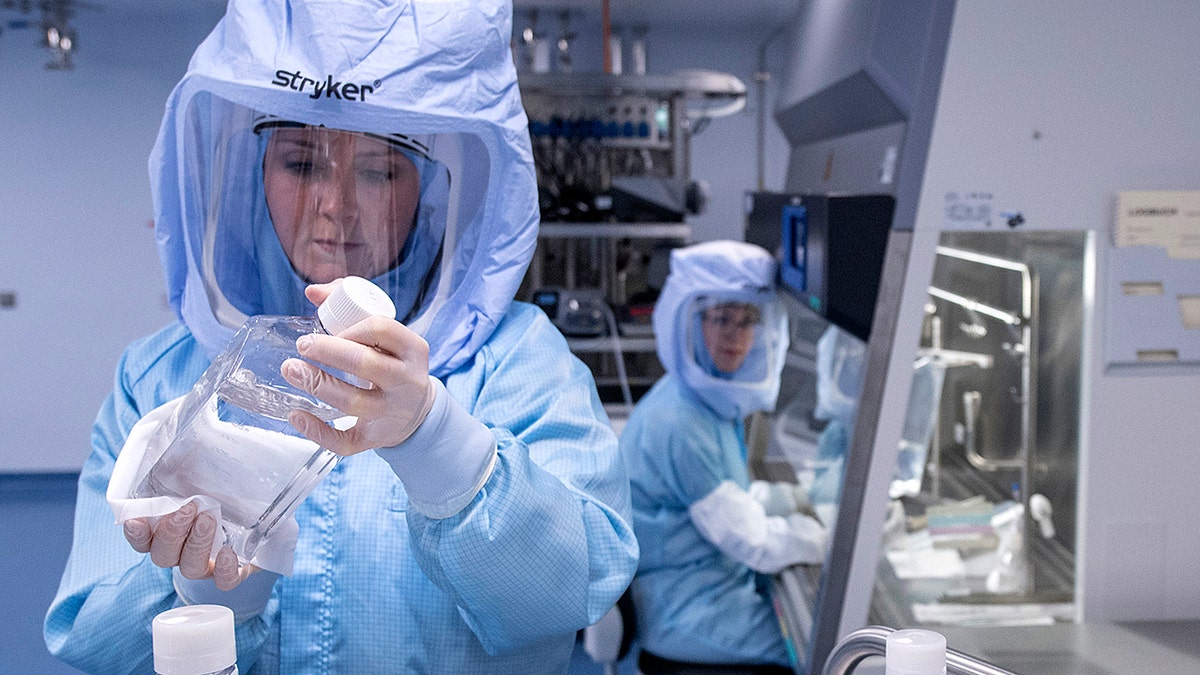



Scientists may have found a way to make old cells act young again |
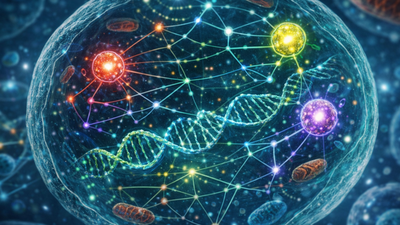
Ageing is often described as a slow accumulation of damage, but a new study suggests something more subtle may be happening inside our cells. Researchers at University of California, San Francisco report that as cells grow older, they do not simply wear out, they lose the coordinated gene activity that keeps them functioning efficiently. By restoring that internal order, scientists were able to make old cells behave in ways normally associated with youth. The findings, published in the Journal Proceedings of the National Academy of Sciences, hint at a future where ageing-related decline might be slowed or partially reversed by resetting cellular control systems rather than replacing cells altogether.
How scientists approached cell aging
The work was led by researchers at the University of California, San Francisco, who set out to understand what fundamentally separates young cells from old ones. Instead of focusing on broken DNA or damaged proteins, the team examined how genes are regulated over time. Using computational models, they compared gene activity in young and aged human cells and noticed a striking pattern: ageing cells showed a breakdown in coordination across large gene networks.This led them to focus on transcription factors, proteins that act as master regulators of gene expression. After narrowing down hundreds of candidates, the researchers identified four transcription factors that appeared central to maintaining a youthful cellular state: E2F3, EZH2, STAT3, and ZFX. Adjusting the activity of these factors became the core experiment.
What happened when old human cells were reset

The first tests were carried out on aged human fibroblasts, cells that form connective tissue and play a key role in repair and structural support. When the researchers restored the activity of the four transcription factors, the old cells began to behave differently. They divided more readily, produced more energy, and showed gene expression patterns closer to those seen in younger cells.Biochemist Hao Li, one of the study’s authors, explained that the cells were not turned into stem cells or fundamentally changed in identity. Instead, they remained fibroblasts but functioned more efficiently. In his words, “Old fibroblasts behaved as if they were younger,” a crucial distinction because maintaining cell identity reduces the risk of dangerous side effects.
Evidence from ageing mice
To see whether the approach worked beyond lab-grown cells, the team tested it in elderly mice, focusing on the liver, an organ heavily affected by ageing. By activating just one of the transcription factors in old mice, researchers observed meaningful physiological improvements. Liver fat and fibrotic scarring were reduced, and glucose metabolism improved, making the tissue function more like that of younger animals.These results were important because they showed that restoring gene regulation could improve whole-tissue health, not just isolated cells in a dish. It suggested that the mechanism might be broadly relevant across different biological systems.
Why this matters for ageing research
The study adds weight to a growing shift in how scientists think about ageing. Rather than viewing it solely as irreversible damage, researchers are increasingly exploring the idea that ageing involves a loss of cellular organisation. Restoring that organisation could allow cells to recover some of their former function.The implications were significant enough to draw attention from leading science outlets, including Nature, which highlighted the findings as part of a broader rethinking of ageing biology. The researchers themselves wrote that their results point to a shared molecular framework for rejuvenation across species, suggesting that the underlying mechanism may be universal.
How this differs from earlier rejuvenation efforts
Previous attempts to rejuvenate cells often relied on reprogramming them into stem-like states. While effective in some contexts, that approach carries serious risks, including loss of cell identity and increased cancer potential. The new strategy avoids this by working within the cell’s existing identity, fine-tuning the regulatory system rather than rebooting it entirely.By targeting transcription factors that already exist in cells, the approach aims to restore balance rather than induce radical change. Researchers believe this could make future therapies safer and more controllable.
Potential risks and unanswered questions
Despite the excitement, scientists are careful to stress that this research is still at an early stage. One of the transcription factors involved, EZH2, has been linked to cancer when overactivated, raising concerns about uncontrolled cell growth. The mouse experiments lasted only a few weeks, so long-term effects remain unknown. Only a limited number of cell types were studied, and it is unclear how other tissues would respond.Any future treatment based on this work would require precise control over where and how strongly these factors are activated. Without that precision, the risks could outweigh the benefits.
What this does and does not mean
The findings do not suggest that humans will soon be able to reverse ageing entirely or extend lifespan dramatically. The researchers are focused instead on healthspan, the length of time tissues and organs remain functional. Even modest improvements in cellular health could delay the onset of age-related diseases and improve quality of life.Janine Sengstack, a senior author on the study, has emphasised that the goal is not immortality, but understanding whether age-related decline can be slowed or partially reversed in a safe way. For now, the research offers a compelling insight: ageing cells may still know how to function like young ones, if the right molecular instructions can be restored.
Discover more from stock updates now
Subscribe to get the latest posts sent to your email.