Shaping the Next Phase of Global Markets: Nasdaq Leadership Insights from WEF 2026
As global leaders convened in Davos for the 2026 World Economic Forum Annual Meeting, the top conversations were centered on AI’s transformative potential, the pace of change and degree of uncertainty, and the role of resilient capital markets in driving growth.
Across interviews, panels, and events, Nasdaq leadership engaged with policymakers, investors, and business executives to explore how innovation, trust, and market infrastructure can support sustainable global growth in the years ahead.
AI, Growth, and Market Confidence


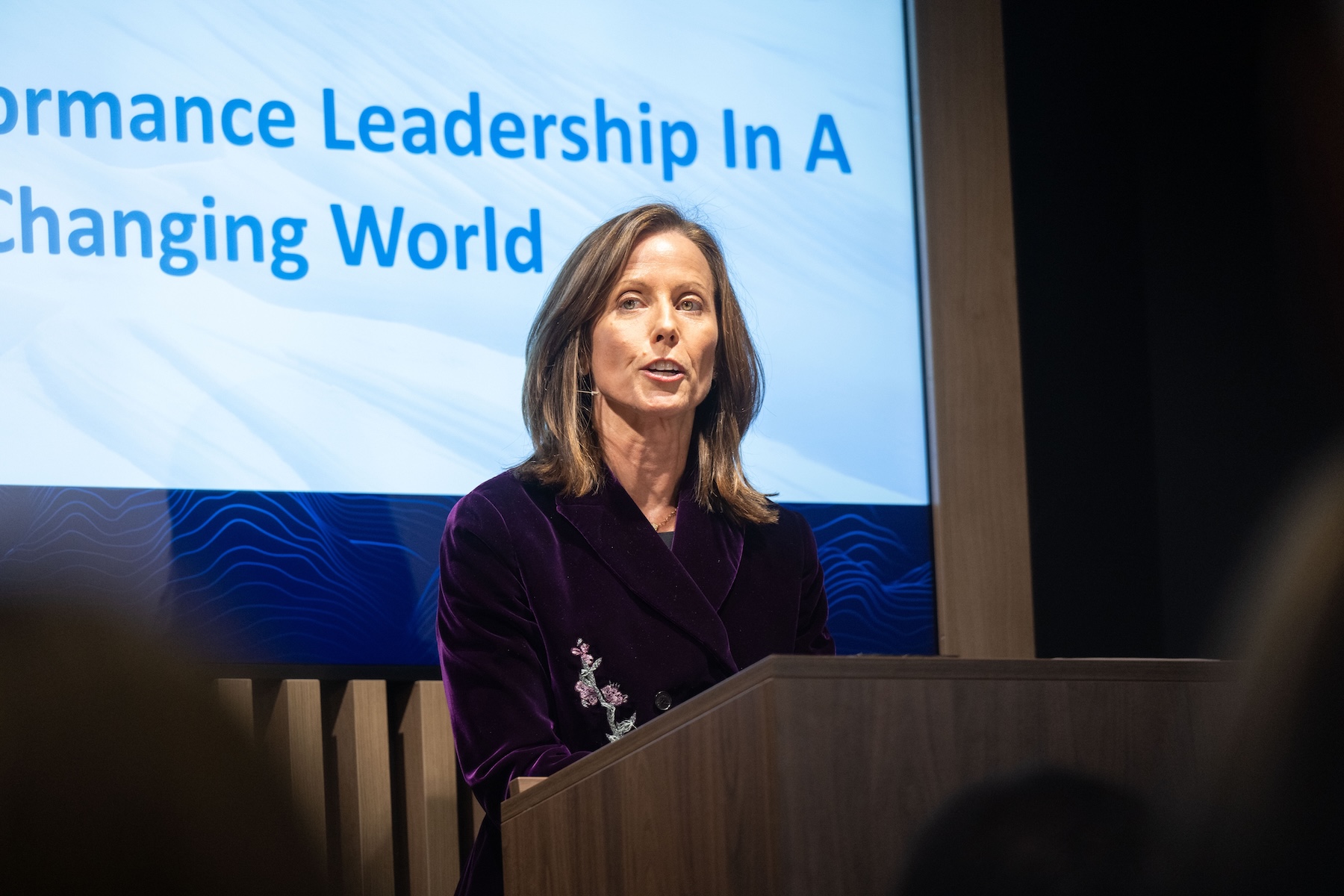
In her outlook note, Nasdaq Chair and CEO Adena Friedman underscored the transformative impact of artificial intelligence and discussed her views about the ingredients it needs to scale. On CNBC’s Squawk Box and Bloomberg Surveillance, Friedman emphasized that AI represents a foundational shift — one that will demand new sources of capital and investment to ensure it can scale across enterprise applications. It can also lower barriers to entry for startups and create growth opportunities for established companies.
“AI is a transformative technology — something that comes around very infrequently,” Friedman told CNBC. “As you look back in the history of our country, all these major technological advancements require an enormous amount of infrastructure to be built out.”
She pointed to early evidence that companies investing in AI are seeing strong returns, with adopters reporting nearly three times the return on investment compared with peers, even as scaling those gains remains a challenge. Friedman also highlighted a constructive economic outlook heading into 2026, noting continued consumer spending and resilient market conditions despite political cycles and global uncertainty.
Nasdaq Survey: What Top Business Leaders Think of AI
Just before the WEF kicked off, Nasdaq released a new 2026 Outlook Survey, which asked CEOs, board chairs, C-suite executives, and leaders for their thoughts on AI and the economy. While 93% of respondents expect AI to have a meaningful impact on how the economy and workplaces function, most organizations remain in the early stages of workforce readiness. Executives reported allocating roughly 20% of technology budgets to AI, reflecting both urgency and caution. Although many leaders believe the AI sector is experiencing a bubble, the prevailing expectation is for consolidation rather than a widespread downturn.
Because AI is becoming so core to 21st-century companies, the role of Chief Technology Officer has never been more important — a point Nasdaq President Tal Cohen made at a Fast Company event. Cohen, quoted in an Inc. article about the event, said that effective CTOs in the AI era “need to demonstrate that they’re three-dimensional,” building relationships with customers, understanding how they’re using products, and translating tech for their CEOs.
Together, these dynamics reflect a broader theme emerging in Davos: technology-driven productivity gains can support long-term growth when paired with sound market structure and confidence.
Convening Leaders Around Market Resilience
Nasdaq’s basecamp served as a backdrop to several notable conversations. Some key events included:
The Nasdaq Opening Night event, hosted with the Financial Times and Teneo, brought together former U.S. House Speaker Paul Ryan and FT Associate Editor Pilita Clark for a discussion on “The Forces Moving Markets.” The conversation explored how geopolitical risk, policy fragmentation, and economic uncertainty are shaping corporate decision-making and capital allocation worldwide.
In partnership with the Institute of International Finance, Nasdaq also hosted a breakfast focused on how financial institutions, regulators, and innovators are collaborating to build more resilient, inclusive, and efficient financial systems.
Nasdaq President Tal Cohen participated in a fireside chat with Emma Corby of CNBC at their event, The Digital Asset Convergence: Building Resilient Markets. He discussed the potential benefits of tokenization and blockchain technology, including greater collateral mobility, enhanced efficiency, and expanded access while strengthening the foundations of global finance.
During an AI reception hosted with Lightspeed and Skild, leaders discussed the technical breakthroughs and scaling challenges shaping the next era of physical AI. In another session, Nasdaq, CoreWeave, and Cohere convened an intimate group of cross-industry executives for a discussion on how AI platforms are enabling new scientific, economic, and competitive breakthroughs.
Nelson Griggs, Nasdaq’s Head of Capital Access Platforms, also participated in the Imagination in Action Davos AI Summit, joining a panel that discussed how organizations are integrating AI into growth strategies, product innovation, and corporate culture.
Looking Ahead
Across Davos, a consistent message emerged from Nasdaq’s leadership: resilient markets depend on trusted infrastructure, thoughtful innovation, and strong leadership. As AI, digital assets, and global capital markets continue to evolve, Nasdaq’s engagement in Davos underscored its role as a partner to issuers, investors, regulators, and market operators working to shape the next phase of global growth.
“Our view is enterprise implementation is going to be the catalyst for AI to really reach its potential. And that is hard, and it’s harder than everyone thinks it is,” Friedman told a Davos audience at Semafor Haus. “And that’s why you need broad-based investors to help manage that investment. We do think that the public markets are going to be critical.”
Discover more from stock updates now
Subscribe to get the latest posts sent to your email.