Ants vs. Humans: How tiny ants survive deadly radiation that humans cannot |
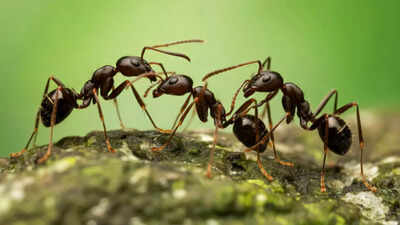
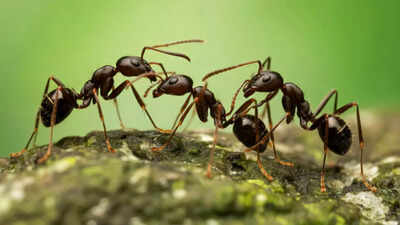
Ants may be small, but they are quite rugged, especially in the face of extreme stressful situations like nuclear radiation. While human beings are known to be adversely affected by illness and health hazards caused by doses of radiation, ants seem to be rather less bothered. Studies have shown us that there are biological mechanisms within the ants themselves that make it possible for them to resist harmful conditions which could easily be withstood by humans. Ants have fascinated us quite a great deal with how life can adapt to extreme conditions. This might seem a little surprising, but small ants have emerged as some of the most radiation-resistant entities in nature. In contrast to humans, who have to adopt critical safety measures to survive in such hostile environments, ant types like Lasius niger essentially survive with little impact even under radiation. This is perhaps a testimony to Nature’s incredible adaptive power and is sure to encourage and fascinate many.
How radiation harms living cells
When exposed to large quantities of radiation, the energy will affect our bodies, especially our cells, whereby our molecules, like our DNA, will surely be damaged, resulting in various mutations, sickness, or death. We, as human beings, are more prone because our tissues are sensitive due to our cell division, which processes information slowly, as well as our unique and complex systems that are prone to disruption. Even minimal levels of toxicity can cause various kinds of cancer or cardiovascular disorders. Fukushima and Chernobyl were real-life examples illustrating the adverse effects of radiation, especially on large animals or human beings.

Why ants may be more radioresistant than humans
Their biological characteristics are some possible reasons why ants are very resistant to radiation.
- Small size and simple anatomy: Tissues comprising antibodies are not large, hence radiation-induced harm will be limited.
- Fast cell cycles: Some insect species have faster cell cycles than mammals, which could possibly help them recover from stress induced by radiation.
- Presence of efficient
DNA repair mechanisms : There may be efficient DNA repair mechanisms in some kinds of ant colonies.
A study on the black garden ant (Lasius niger) was conducted to determine the effect of ionising irradiation on ant survival and behaviour. It is important to understand that the study on the effect of ionising irradiation on Lasius niger has shown that Lasius niger shows a level of radioresistance that would be impossible for humans to match under similar conditions.
Lessons from extreme survivors in nature
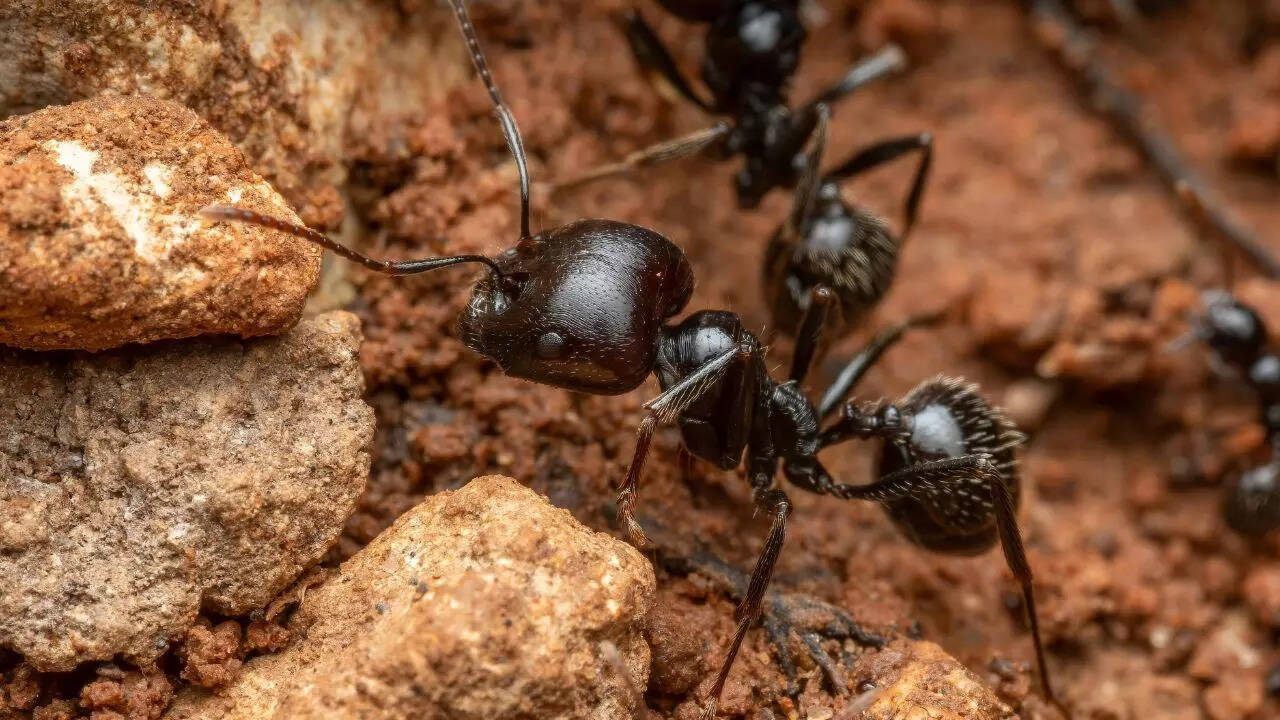
Ants are not the only microscopic life forms with extraordinary lives. Micro-tards or microscopic ‘water bears,’ as they are called, can withstand a vacuum in space as well as intense radiation. Some bacteria live in radioactive environments like the Chernobyl zone. These indicate different strategies that life has evolved to withstand conditions harmful or fatal to humans.Social behaviour in the case of ants may be another contributing factor. For example, ants are able to rapidly eliminate infected members in a colony, creating a structured environment within the colony that helps to limit the spread of infection or stress within a colony of ants. This may be an important factor in their ability to withstand environmental factors that might otherwise threaten them as a solitary animal species.
What this means for science and human survival
The understanding of why ants are better at surviving radiation exposure than humans has practical uses. For instance:
- Advances in radiation therapy: Insight into DNA repair mechanisms may inform approaches to
cancer treatment . Space exploration : Understanding how small organisms resist nuclear radiation will also help to keep astronauts safe while in space.- Environmental monitoring: These species may be useful as indicators in detecting the effects of radioactive exposures.
Though humans will not be substituted by them in extreme conditions, maybe the technique that they use to survive will be useful in the future for human beings.
Discover more from stock updates now
Subscribe to get the latest posts sent to your email.