



What is RBI nudging India to do at BRICS? | Explained

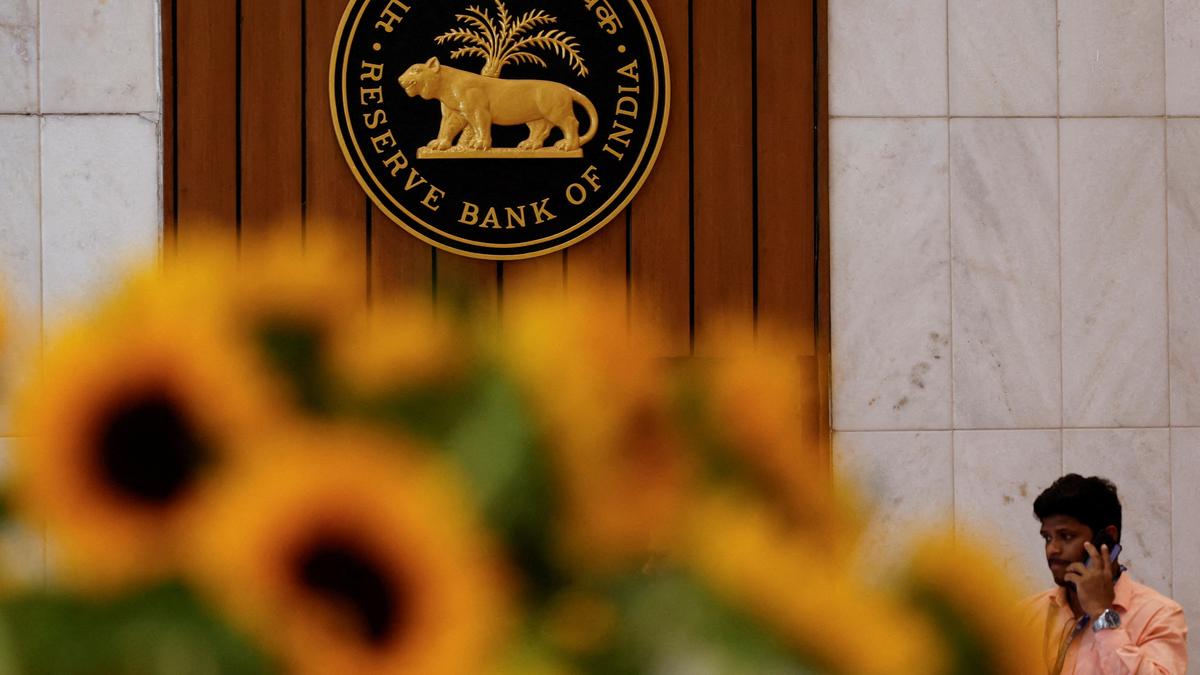
Image used for representational purposes.
| Photo Credit: Reuters
Also Read: On Central Bank Digital Currency and BRICS

What is the proposal by the RBI?
While not officially announced, news reports have cited sources at the central bank saying it has written to the Ministry of Finance to leverage India’s chairmanship of the BRICS in 2026 to encourage the BRICS nations to use their Central Bank Digital Currencies (CBDCs) to facilitate cross-border payments. If this were to take off, it would be a payments system spanning not just the five founding members of BRICS — Brazil, Russia, India, China, and South Africa — but also more recent joiners such as Egypt, Ethiopia, Iran, the United Arab Emirates, and Indonesia. Several more countries are waiting in the wings to join the grouping.

What are central bank digital currencies?
CBDCs are legal tender issued by a central bank entirely in digital form. In India, for example, the RBI has been issuing the e-rupee on a limited scale. This currency is the same as the normal rupee but is entirely digital and a store of value on its own. That is, the CBDC is held in a wallet that is separate from your bank account. Where the Unified Payments Interface (UPI) facilitates the transfer of rupees from one bank account to another, CBDCs move from one wallet to another, with each transaction recorded on a blockchain — in essence a digital ledger.
CBDCs differ from private cryptocurrencies in that, where private cryptocurrencies like Bitcoin are decentralised by design, with no central issuer and no regulator, CBDCs have a very definite issuer and regulator: the central bank. Also, while most cryptocurrencies (apart from stablecoins) are not pegged to any real-world asset from which they can derive value, CBDCs are backed by the central bank and have a set value. That is, one e-rupee equals one rupee.
What are the benefits of using CBDCs?
Being entirely digital and linked to a blockchain makes CBDCs extremely transparent. A blockchain is a ledger visible to all parties and immutable in structure. Once a transaction is recorded, it is permanent. It cannot be deleted or modified, and the only way to ‘undo’ it is to conduct a reverse transaction of the same value.
Cross-border transactions are a major route for black and laundered money. The transparency and immutability of CBDCs could be a huge advantage in tracking these transactions and cracking down on them. In addition, the nature of these currencies allows them to be programmed in particular ways. For example, they can be programmed to be usable only for certain transactions. As the RBI website mentions, they can be programmed to be applicable on the basis of expiry dates, geo-location, merchant registration codes, particular merchant categories, etc. The limits of what can be programmed lie in the imagination of those doing the coding. The blockchain can also be programmed to record details such as the payer’s and payee’s names and other identifiers, adding further transparency.
At a larger geopolitical level, CBDCs can also help India deal with some of its stickier international payments-related issues. For example, trade with Iran and Russia has become significantly harder because both countries have been excluded from the U.S. dollar-based SWIFT international payments system. At the moment, India is getting around this by making payments in national currencies, but that approach has its limitations and is not sustainable for long. CBDCs, thus, offer a workable solution. Iran held a blockchain conference in November 2025, at which several officials urged BRICS nations to trade with Iran using cryptocurrencies.
What are the risks?
The first issue is that working out the legal and regulatory issues between multiple countries could take a long time, and so the benefits of such a structure will likely not be available for some years ahead. The other, more significant and immediate, issue is how the U.S. will react to such a step. U.S. President Donald Trump has already in the past threatened additional tariffs on BRICS countries if they go ahead with developing alternatives to the U.S. dollar. A move to use CBDCs as opposed to the dollar could, therefore, attract further tariffs on top of the 50% tariffs already levied on imports from India. India will have to weigh the costs of additional tariffs against the benefits of using CBDCs for cross-border payments.
Published – January 25, 2026 05:16 am IST
Discover more from stock updates now
Subscribe to get the latest posts sent to your email.