Strongest solar radiation storm in 20 years reaches Earth: Satellites and flights on alert; NOAA confirms |

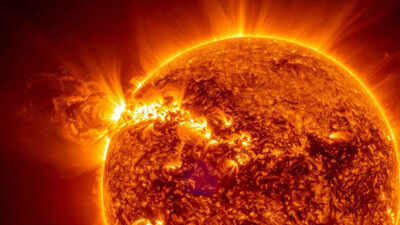
A rare and intense energy flare from the sun has reached our planet, leading to what scientists say is the most violent solar radiation storm in the past two decades. While of intense scientific interest, the phenomenon also promises to provide spectacular displays of the northern lights in areas that do not normally witness such displays, making a space phenomenon invisible to the naked eye visible to all.The storm is a result of increased solar activity and has been under keen observation by space weather officials as it has been developing over the last several days. Although it has several spectacular visual impacts, space weather officials are also keeping a very keen eye on its possible disruptions.
Severe S4 solar radiation storm hits Earth, SWPC NOAA confirms
The Space Weather Prediction Center (SWPC) of the National Weather Service, has just confirmed that Earth is passing through a severe solar radiation storm, rated S4 on a five-point scale. For the record, the agency said this is the strongest such storm since October 2003 and marks another significant moment in the current solar cycle.Solar radiation storms occur when intense bursts of energetic particles are released by the Sun and travel rapidly through space. When these collide with Earth’s magnetic field, they can interfere with technology in orbit and at high altitudes while energizing the atmosphere in ways that produce vivid auroras. An S4-level storm is categorised as “severe” and rarely observed. Space weather experts remark that events of this intensity are relatively rare and usually occur during periods of high solar activity near the peak of the Sun’s 11-year cycle.It has been reported that the main impact would be experienced in space and high-altitude systems by satellite operations, space launch operations, and various air routes, especially those that traverse routes close to the polar regions. Radio communications on high frequencies would be totally disrupted in the polar regions during the time the storm is active.

Potential impacts on aviation and satellites
Although the storm does not involve much direct risk to people at ground level, it has relevance for modern infrastructure: flights at high altitudes or along polar routes could face communications problems, and airlines have been warned to take extra care.There is also a slightly increased risk of radiation exposure for flight crews and passengers on long-distance, high-latitude flights. Satellite operators, meanwhile, are keeping a close eye on systems for possible interference, signal degradation, or minor hardware stress caused by the solar particles.The SWPC has informed significant stakeholders such as airlines, NASA, the Federal Aviation Administration, and emergency management agencies to be ready across essential sectors. Officials have underscored again and again that the potential for early warnings could minimize disruption.
Northern lights expected in unusually wide areas
While many will experience the aftermath of this storm through their power and communication systems, there are those who will feel it in other ways, such as through their view of the night sky. The storm is expected to extend the aurora regions well into North America.The closer to the north that one views the aurora, the more intense the lights will be, according to forecasters. But in optimal viewing conditions, the lights could be strong enough to be seen much farther south than usual, especially late Monday night and early tomorrow as the storm reaches its peak.The best viewing conditions feature clear skies and low levels of light pollution. To observe the phenomenon successfully, patience is also warranted in these respects.
Why solar storms create auroras
Aurorae are created when charged solar particles collide with gases present in the upper atmosphere of our planet. This collision of particles emits energy in terms of light. This produces spectacular curtains of colored lights like greens, pink, and purples.When massive solar storms occur, it means that the Earth’s magnetic field is exposed to the solar storm in a much stronger way, allowing the phenomenon of auroras to extend to latitudes that were not covered before. Such massive phenomena turn a complicated process involving the Sun and theEarth into one of the Earth’s most beautiful sights.
How long will the storm last
The expected levels of solar radiation are also anticipated to remain high for a couple of days, but will continue to fluctuate depending on the development stages of the solar storm. There might be increased and then decreased radiation intensity, but the monitoring process will continue to update alerts.
Discover more from stock updates now
Subscribe to get the latest posts sent to your email.