Baby dinosaur fossils found in Arctic permafrost reveal how dinosaurs survived polar winters |
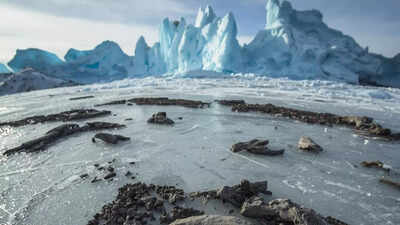
In a startling flip-flop on our perspectives on ancient civilisations, scientists have discovered baby dinosaur fossils buried in Arctic permafrost, thereby validating that dinosaurs did nest in the polar regions. These fossils of dinosaurs that are merely 2 millimetres long, comprising tiny teeth, have been discovered in Alaska’s Prince Creek Formation, a harsh terrain on the North Slope. These fossils belong to at least seven different species of dinosaurs, ranging from the harmless duck-billed hadrosaurs to more fearsome tyrannosaurs. What is most intriguing is that these fossils belong to embryos or infant dinosaurs, thereby establishing that these dinosaurs laid eggs and bred their young ones in the Arctic region.In a study published in Current Biology, “Nesting at extreme polar latitudes by non-avian dinosaurs,” similar findings regarding the fossils of baby dinosaurs in northern Alaska have been recorded. This study has made it clear that 70% of the dinosaur groups that can be traced to the Prince Creek Formation are represented by juvenile fossils. This implies that such dinosaurs persisted through the polar winter as opposed to migrating to warmer areas.
What the fossils reveal

Scientists found miniature dinosaur teeth and bone fragments measuring 1-2 mm in Northern Alaska.Several different groups of dinosaurs are included in this lineup. These include a minimum of seven different kinds of dinosaurs, ranging from plant-eaters like duck-billed dinosaurs to meat-eaters like tyrannosaurs.These fossils represent embryos and newborns, indicating that these dinosaurs bred in the Arctic, laying eggs and caring for their young, rather than migrating south.It is a fact that a large number of dinosaur families that lived in this region have been discovered to be hatchlings, which is approximately 70% of species.The average temperature in the late Cretaceous Arctic is thought to have been about 6° C, or about the same as Ottawa, with seasonal forests. Such a long, cold, dark period made it necessary for the dinosaurs to develop properties such as warmth or insulation, perhaps in the form of feathers.
There was no need for dinosaurs to migrate
Newborn dinosaurs would have faced a daunting task trying to migrate out of the Arctic. Co-author Prof. Gregory Erickson says that dinosaur eggs in that region likely needed 5–6 months to hatch, so the hatchlings emerge right as winter’s darkness settles in. Given the long incubation, the small size of hatchlings, and the short summer in the Arctic, there seems little chance for migration at all. In short, hunkering down and surviving the chill was far more practical than a 3,000-kilometre journey southward.
A new view of dinosaurs
These Arctic hatchlings are rewriting scientists’ concepts of dinosaur life. The fossils suggest dinosaurs were far more resilient than had been supposed, possibly even warm-blooded, and able to survive conditions most living creatures would find inhospitable. By demonstrating polar nesting, this research suggests that both dinosaur biology and behaviour have proven to be more complex than ever envisioned. Further expeditions will push deeper into this frozen past, and this is just the start of understanding how dinosaurs thrived in the endless night.
Discover more from stock updates now
Subscribe to get the latest posts sent to your email.