Microscopic crustacean discovered in Kavaratti established as a new genus and species, say researchers
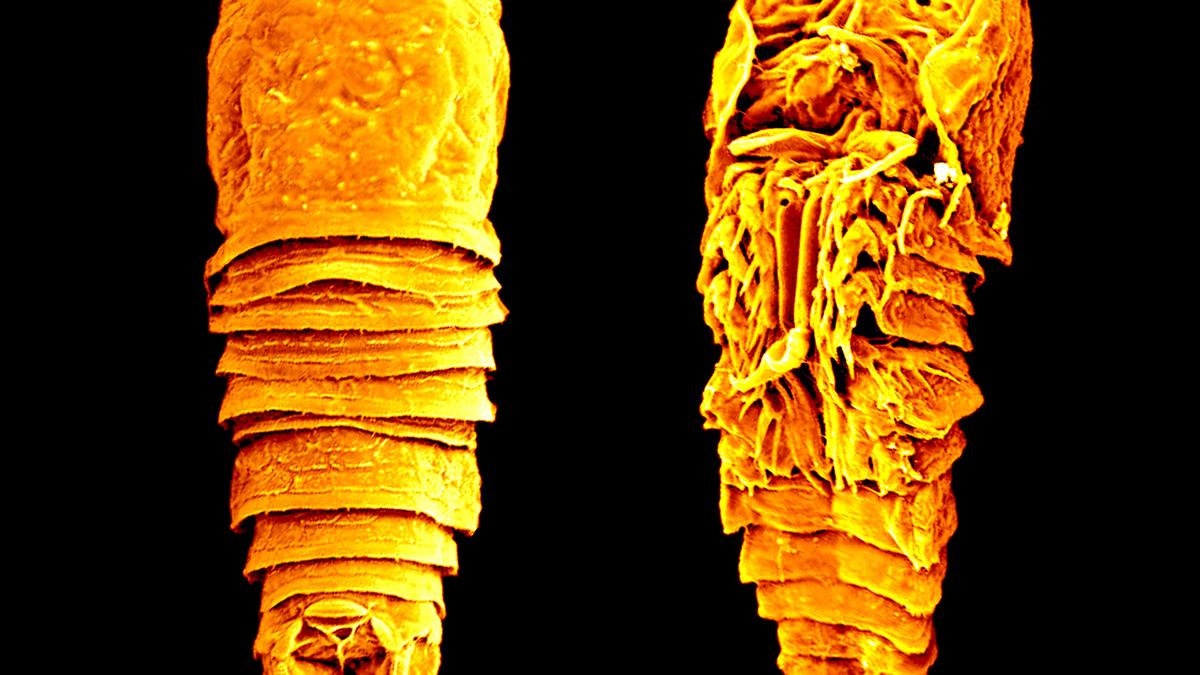
The crustacean has been named Indiaphonte bijoyi, with the generic name Indiaphonte honouring India and the species name bijoyi named after S. Bijoy Nandan, Dean, Faculty of Marine Sciences, Cochin University of Science and Technology (Cusat) and a former Vice-Chancellor of Kannur University.

The new organism has been scientifically described by Neelima Vasu K., a researcher in the Department of Marine Biology at Cusat, in collaboration with Samuel E. Gómez-Noguera, a copepod taxonomist and Professor at UNAM University, Mexico. The discovery has been highlighted in a paper in the journal Zootaxa.
The newly-described species has a semi-cylindrical, depressed body that is wider in the middle and tapering towards the posterior. It also has antennae-like appendages at the front. The females are slightly larger than the males with a body length ranging from 518 to 772 micrometres. The males have a body length ranging from 508 to 756 micrometres.
Vital role
Organisms such as Indiaphonte bijoyi are essentially Meiofauna, tiny invertebrate animals less than 1 millimetre in size living in sediments in aquatic environments. With 350 species across 77 genera, the family Laophontidae is among the most diverse within the order Harpacticoida. Though microscopic in size, they play a vital role in maintaining the health of marine and freshwater ecosystems.
“Harpacticoid copepods have the ability to produce and convert omega-3 fatty acids such as Eicosapentaenoic Acid (EPA) and Docosahexaenoic Acid (DHA) that are essential for the growth of fish and shellfish and contribute significantly to human nutritional security. Due to their sensitivity to pollution, oil spills, heavy metals, and climate change, Harpacticoid copepods are considered reliable bio-indicators of environmental change. They are widely used in aquaculture and fisheries, especially as live feed for fish larvae,” said Ms. Vasu .
The genus Indiaphonte is considered new because it exhibits a unique combination of morphological traits that do not match any previously recorded genus within the Laophontidae family. For her, naming the new species after Dr. Bijoy Nandan also represents ‘Guru Dakshina’ as well as honouring his long-standing contributions in benthic macro and meiofaunal research, marine environmental science, ecology, taxonomy, biodiversity and marine ecosystem conservation, said Ms. Vasu.
Published – January 18, 2026 04:22 pm IST
Discover more from stock updates now
Subscribe to get the latest posts sent to your email.