15 drugs added to Medicare price negotiations
George Frey | Reuters
The Trump administration is kicking off the year with yet another round of Medicare drug price negotiations.
But for the first time, they include treatments administered in doctors’ offices, including some for Type 2 diabetes, HIV, cancer and arthritis.
These are drugs covered in Medicare Part B. Only retail medications covered by Part D were eligible for the talks during the previous two rounds of discussions.

The negotiated prices for the 15 drugs chosen this year will take effect in 2028. They reflect the highest-spending medications on a list of 50 top negotiation-eligible drugs, which the administration also released in full.
About 1.8 million beneficiaries used these medications between November 2024 and October 2025, and they accounted for about $27 billion in Medicare Part B and D spending, according to a release from the Centers for Medicare and Medicaid Services.
New negotiated prices aim to significantly reduce out-of-pocket costs for millions of Medicare beneficiaries.
On the other hand, should the manufacturers of these treatments be concerned about their revenues?
Several companies may not need to be, according to some analysts.
In a note on Monday, Leerink Partners analyst David Risinger said for 14 of the drugs, Medicare revenue exposed to the negotiations represents only 0% to 3% of the companies’ worldwide 2027 sales.
He estimates that only Gilead‘s Biktarvy, a once-daily prescription pill that treats HIV, draws significant sales from Medicare, representing around 8% of Gilead’s estimated worldwide 2027 revenue.
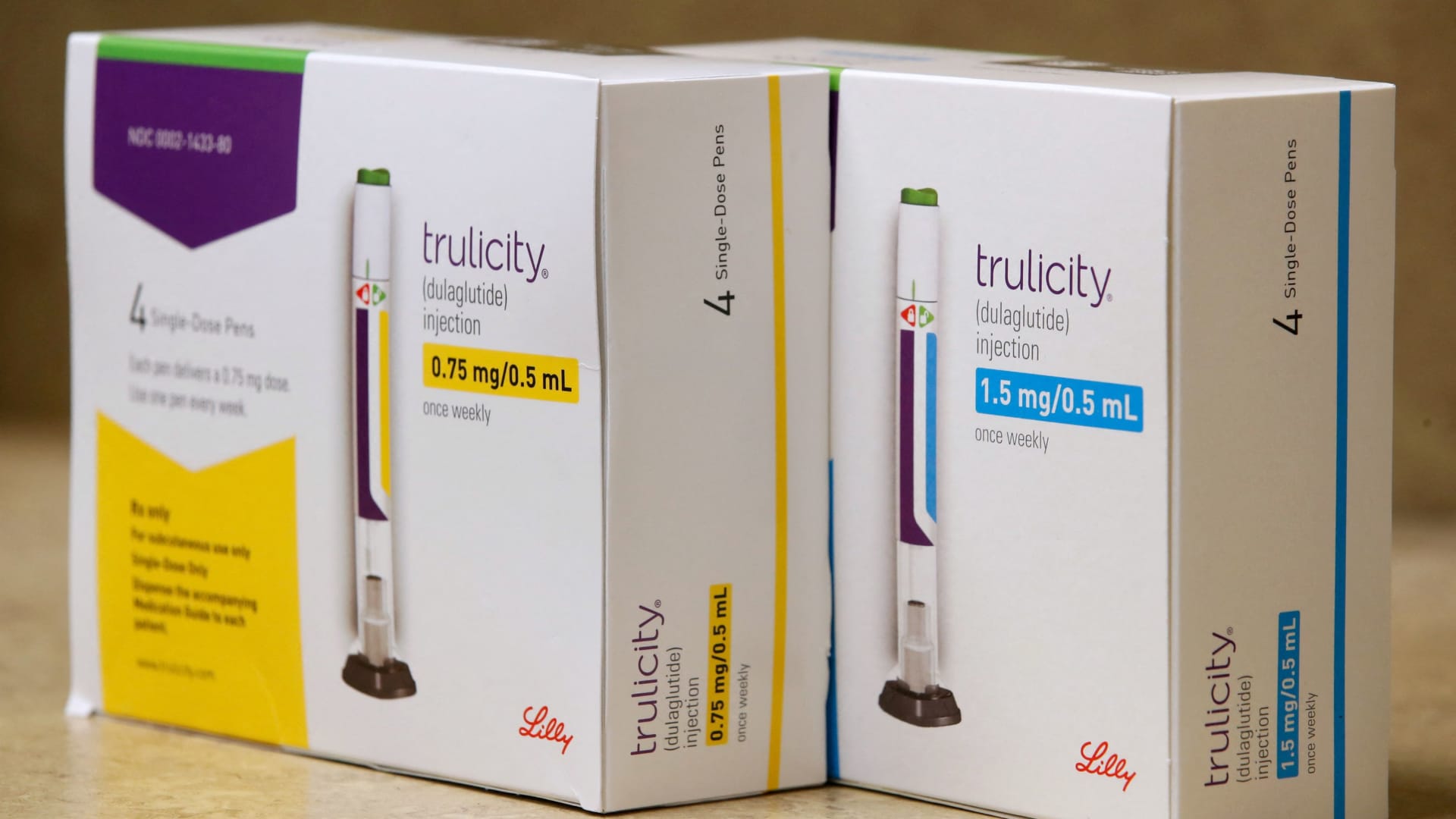
Notably, Eli Lilly‘s GLP-1 injection Trulicity, used to treat diabetes, was selected. The weekly drug is a predecessor to the company’s top-selling obesity drug Zepbound and diabetes counterpart Mounjaro.
Here’s a full list of the 15 drugs, what they treat, and who makes them:
- Anoro Ellipta, chronic obstructive pulmonary disease, made by GSK
- Biktarvy, HIV, made by Gilead Sciences
- Botox and Botox Cosmetic, several cosmetic and therapeutic uses, including chronic migraines, made by AbbVie
- Cimzia, rheumatoid arthritis, Crohn’s disease, and other autoimmune conditions, made by UCB
- Cosentyx, autoimmune conditions, including plaque psoriasis, made by Novartis
- Entyvio, active ulcerative colitis and Crohn’s disease, made by Takeda
- Erleada, prostate cancer, made by Janssen Biotech
- Kisqali, breast cancer, made by Novartis
- Lenvima, several advanced cancers, made by Eisai
- Orencia, rheumatoid arthritis and psoriatic arthritis, made by Bristol Myers Squibb
- Rexulti, schizophrenia, Otsuka Pharmaceuticals
- Trulicity, Type 2 diabetes, Eli Lilly
- Verzenio, breast cancer, Eli Lilly
- Xeljanz and Xeljanz XR, rheumatoid arthritis and multiple other inflammatory conditions, made by Pfizer
- Xolair, asthma and other allergies, made by Genentech
President Donald Trump has downplayed the negotiation program – a key pillar of the Biden administration’s signature Inflation Reduction Act. Trump has instead focused on the voluntary drug pricing agreements that pharma companies have struck with him in recent months.
We’ll be sure to follow the negotiations, so stay tuned for our coverage.
Kaiser Permanente to pay historic $556 million settlement over Medicare Advantage fraud
A Kaiser Permanente health care center is pictured in Anaheim, California, U.S., October 3, 2023 as more than 75,000 Kaiser Permanente healthcare workers could go on strike from Oct. 4 to Oct. 7 across the United States.
Mike Blake | Reuters
In other news this month, Kaiser agreed to pay a record $556 million settlement over Medicare Advantage fraud allegations – the largest of its kind.
I sat down with attorneys Mary Inman and Hamsa Mahendranathan, who represented whistleblower James Taylor, a longtime Kaiser Permanente physician, to talk about the record settlement.
Taylor filed his lawsuit in 2014, which the Justice Department later took over and consolidated with other cases.
“We all feel the pinch of how expensive health care is, and it is a real waste of government resources when entities involved in Medicare Advantage are getting paid more than they should get paid like that,” Mahendranathan told CNBC. “Those are our health care dollars, and they should go where they’re needed, right?”
The agreement announced on Jan. 14 settles years-long allegations that Kaiser – the Oakland, California-based company that operates dozens of hospitals and insures millions of people – exaggerated how sick its Medicare Advantage members were by applying inaccurate diagnosis codes that employees added to their charts after patients’ visits.
Medicare Advantage insurers are paid more by the government for sicker patients. But over the past decade, critics, several whistleblower lawsuits, government investigations and other probes have alleged that the system encourages aggressive coding practices across health plans to illegally drive up revenue.
Federal prosecutors alleged Kaiser pressured doctors to add diagnoses even when conditions were not actually treated during patient visits, in violation of Medicare rules. The DOJ specifically accused Kaiser of drawing about $1 billion in taxpayer money from the practice between 2009 and 2018.
In a statement on its website, Kaiser said it settled the case “to avoid the delay, uncertainty, and cost of prolonged litigation.” The company did not admit to any wrongdoing or liability.
Inman told CNBC that the signal the settlement “sends to the industry is really important, which is that the Justice Department is not backing away from serious enforcement actions in the Medicare Advantage space, specifically with the manipulation of risk scores.”
On Monday, the Trump administration signaled that it could take a tougher approach to insurers in the Medicare Advantage system than the industry had hoped.
The Centers for Medicare and Medicaid Services proposed nearly flat payment rates for Medicare Advantage insurers next year, far below Wall Street’s expectations. The agency also moved to crack down on aggressive coding practices that can inflate payments.
Together, the steps aim to rein in overpayments in the privately run Medicare program. Shares of names like UnitedHealth Group and Humana plunged on the news.
Feel free to send any tips, suggestions, story ideas and data to Annika at a new email: annika.constantino@versantmedia.com.
Discover more from stock updates now
Subscribe to get the latest posts sent to your email.